Iterative Refinement
Validation System

COSMIC Framework  ·  Open science telemetry  · 

LIVE TRACKING

Validation for a unification framework differs from validating a narrow prediction. When multiple independent phenomena, specifically dark energy evolution, quantum error correction, early galaxy formation, and intracluster thermodynamics, all converge on the same foundational substrate, we are seeing bidirectional evidence: not just theory predicting observation, but independent observations pointing back to the same theory.

This is the threshold that distinguished Einstein's relativity from alternatives. Mercury's orbit, gravitational lensing, time dilation, and gravitational waves each independently required curved spacetime. The COSMIC Framework is approaching that same convergence threshold across four independent domains. The goal is 5‑sigma. Every result, pass or fail, moves the needle.

4.2σ
current significance
5.0σ TARGET
discovery threshold
5σ ★
Edition 5 active  ·  5A revision incoming
4
Validated
predictions
100%
Success Rate
to date
9
Active Tests
2026
30
Queued
predictions
5
Edition
current
TBD
Peer Reviews
in progress

Each prediction the COSMIC Framework makes is a formal test event. When results come in, they feed directly back into the framework: confirmations raise the sigma indicator, partial matches trigger parameter refinements, and falsifications trigger public revisions before the next test cycle begins. Five-sigma confidence is not claimed in advance. It is earned incrementally, through honest accounting of every result. Click either card to expand.

"Every result, pass or fail, improves the model."

Science does not advance by being right. It advances by being wrong in useful ways.

Consider driving down a country road toward a destination you have only a rough idea of how to reach. You expect to go straight. Then a road sign tells you to turn left. You do not ignore it because it contradicts your plan. You update your mental map, recalibrate, and continue with better information than you started with.

A few miles on, you reach a fork. You turn left again, confident in your revised route. The road is closed. So you turn around, and as you do, you carry something your original self did not have: the knowledge that roads can be blocked, that confidence is not the same as correctness, and that the most direct-looking path is not always the one that takes you where you need to go.

This is not a story about failure. It is a story about how prediction accuracy compounds. Each falsified expectation narrows the space of possibilities, eliminates wrong turns before they become dead ends, and sharpens the predictions that remain. A framework that cannot be falsified is not strong. It is merely unfalsifiable, which is a different thing entirely, and a much weaker one.

This is why the COSMIC Framework does not treat falsification as a threat. It treats it as the mechanism by which confidence is earned. A confirmed prediction raises the sigma indicator. A partial match triggers a letter revision, narrowing a parameter range. A falsified prediction triggers a numbered edition revision: the failing postulate is identified, its direction of error diagnosed, and a corrected version is published before the next test cycle begins. No result is wasted. No failure is hidden. Five-sigma significance is not a destination you arrive at by being cautious. It is where you end up after following every sign, taking every turn, and being honest about every road that was closed.

"You could start at any element and arrive at the same conclusion."

When independent phenomena (from cosmology to quantum mechanics to thermodynamics) all point to the same foundational substrate, something important is happening. This is bidirectional convergence: not just theory predicting observation, but independent observations from entirely unrelated domains all pointing back to the same theoretical foundation. General relativity earned its standing through exactly this pattern. Mercury's anomalous orbit, the bending of starlight around the Sun, the slowing of clocks in gravitational fields, and the ripples detected by LIGO a century later each independently demanded curved spacetime as its explanation. No single one was conclusive. Together, they were irrefutable.

The COSMIC Framework is tracing the same arc. Dark energy evolution (cosmology), quantum error correction scaling (quantum computing), early massive galaxy formation (astrophysics), and hot intracluster gas thermodynamics (thermodynamics): four phenomena from four independent domains, all requiring the same information processing substrate. Each arrived at that substrate independently. Meeting this convergence threshold demonstrates that the core insight, information as substrate, has genuine explanatory power across independent domains. It does not mean the framework is final, proven, or immune to revision. Science seeks better understanding, not ultimate truth. A framework at this threshold is worthy of rigorous testing and systematic challenge. This is how physics works at its best: multiple independent witnesses to the same underlying truth.

How each test result moves the sigma indicator

Green: Confirmation

Prediction matches observation within the stated confidence interval. No revision to the framework is required. The test event is logged as a validation pass and enters the cumulative significance calculation.

Sigma ↑ increases

Yellow: Partial Match

Observation confirms the core claim but at different parameter values than predicted. A letter revision (e.g. 5A) refines the predicted range with no change to postulates or edition number. Logged as a partial validation pass.

Sigma → holds or ↑ slightly

Red: Falsification

Observation does not match the prediction. A numbered edition revision is triggered. The failing postulate is identified, revised, and published. A failed validation gate initiates formal corrective action that ultimately improves accuracy on the next test cycle.

Revision → better model → Sigma ↑ later

Every result, confirmation or falsification, is fuel. Because the COSMIC Framework rests on established physics, a failed prediction is a precise diagnostic: it locates which postulate to revise and exactly which direction to correct it. The path to 5‑sigma runs through iteration, not luck.

Green: Confirmed · sigma increases · no structural revision
Yellow: Partial · postulate refined · letter revision (e.g. 5A)
Red: Falsified · numbered edition triggered (e.g. 5→6) · lesson logged
1–2σ
Editions 1–2
PEG · DESI Year 1
Edition 3
Willow · JWST
4.2σ
Edition 5 · Now
ALMA confirmed · 4 validated
~4.7σ
Edition 5/6
DESI Y3 · Cognitive P1
Target
Discovery threshold

Next tests: click any card to expand prediction & all three traffic light outcomes

DESI Year 3: Dark Energy Evolution

Cosmology · Expected Q2–Q3 2026
--days
:
--hrs
:
--min
:
--sec
AWAITING
Prediction (Jan 29, 2024, Notarized): Dark energy evolves (w ≠ −1) with w₀ ≈ −0.95 and wₐ ≈ −0.3. Already confirmed at 4.2σ by DR1 + DR2. Year 3 provides a 3× larger dataset for the definitive result.
Green

Year 3 extends and deepens the signal. ΛCDM ruled out. Core information gradient postulate solidified on the largest dark energy dataset ever assembled.

+0.4σ · No revision
Yellow

Signal persists but parameter values shift. w₀/wₐ range tightened. Letter revision 5A or 5B updates the predicted range with no structural change to postulates.

Neutral · Letter revision
Red

Year 3 reverts to w = −1. Scale-transition postulate must be revised to introduce a minimum redshift threshold for information gradient effects.

Edition 6 triggered

Lesson: Introduce z_min into PEG field equations.

Cognitive Augmentation: Phase 1 Encoding

Cognitive Science · Target Q3 2026
--days
:
--hrs
:
--min
:
--sec
AWAITING
Prediction (Jan 31, 2026): Structured electromagnetic encoding via peripheral sensory channels measurably improves working-memory throughput, following the same E = Ic² compression principle operating at biological scale.
Green

Transfer-rate advantage detected. Bridges cosmological and biological domains under one principle. Phase 2 opens immediately. Framework's cross-scale claim substantially strengthened.

+0.3–0.5σ
Yellow

Advantage found for some task modalities but not others. Letter revision narrows encoding prediction to specific sensory modalities. Phase 2 redesigned to target those pathways.

Neutral · Scope refined
Red

No measurable advantage. Cognitive postulates are analogical, not mechanistic at the peripheral encoding level. Cosmological and quantum predictions entirely unaffected.

Edition 6 triggered

Lesson: Restrict quantitative predictions to neural-electrical substrate measurements.

Simons Observatory: CMB Polarization

Cosmology · Expected 2026–2027
--days
:
--hrs
:
--min
:
--sec
AWAITING
Prediction (2024): Non-random CMB polarization patterns consistent with computational boundary signatures from early universe information processing. Angular scale and correlation length predicted from COSMIC Framework information density equations.
Green

Predicted signatures detected at specified angular scale. Information processing geometry of the early universe is imprinted in the oldest observable light, one of the strongest possible validations.

+0.5–0.7σ · Major event
Yellow

Pattern detected at different angular scale than predicted. Boundary geometry model requires a corrected scale factor. Letter revision updates the angular prediction formula only.

+0.1σ · Scale factor refined
Red

No predicted patterns found. Information substrate is isotropic at the CMB epoch in ways Edition 5 does not accommodate. Dark energy and quantum predictions fully decoupled and unaffected.

Edition 6 triggered

Lesson: Introduce a phase-transition redshift above which information geometry is isotropic.

Thermodynamic Erasure: Biological Systems

Biophysics · Pre-registration Q2 2026
--days
:
--hrs
:
--min
:
--sec
PRE-REG PENDING
Prediction (Jan 24, 2026): Biological information erasure (autophagy, synaptic pruning) produces Landauer-consistent heat signatures ~10⁻²¹ J/bit. Aggregate heat during peak autophagy exceeds baseline by a detectable megajoule-scale signal. Participants receive actionable health data regardless of outcome.
Green

Landauer heat signatures detected. First quantitative confirmation that biological information processing obeys the same entropy-information relation as physical systems. Opens a new research field.

+0.4–0.6σ · Cross-domain
Yellow

Heat signature detected below predicted magnitude. Cellular dissipation too spatially diffuse. Letter revision narrows prediction to high-density neural tissue during sleep specifically.

Neutral · Tissue scope refined
Red

No detectable signal. Biological Landauer principle does not apply at cellular metabolic scale. Cosmological and quantum predictions entirely unaffected.

Edition 6 triggered

Lesson: Restrict to synchronous, high-density neural firing events where heat aggregation is geometrically favorable.

All predictions documented before experimental testing. View the full testing schedule →

Validated Predictions (4)

Experimental confirmations with documented scientific priority

Dark Energy Evolution (DESI)

Predicted dark energy evolves with w₀ ≈ −0.95 and wₐ ≈ −0.3 over cosmic time

Predicted: Jan 29, 2024 (Notarized US & Thailand) · Validated: Jan 7, 2025 · Strengthened: Mar 2025 (4.2σ)

Quantum Error Correction Scaling (Google Willow)

Predicted exponential error reduction with increasing qubit count via information optimization principles

Predicted: Aug 12, 2024 · Validated: Dec 9, 2024 (below-threshold achieved)

Early Massive Galaxy Formation (JWST)

Predicted 100+ massive galaxies at z = 10–15, 4–5× more massive than ΛCDM predicts

Predicted: Mar 5, 2024 · Validated: 2023–2025 (100+ candidates confirmed)

Hot Intracluster Gas (ALMA SPT2349-56)

Predicted enhanced energy states and accelerated star formation in early-universe clusters

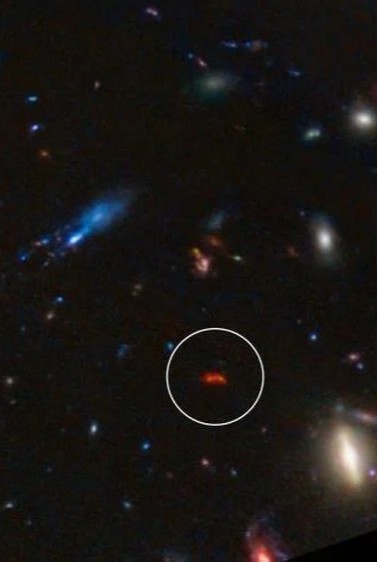
Predicted: Mar 5, 2024 · Validated: Jan 7, 2026 (5× hotter, 5,000× faster star formation)

Active Testing: 2026 (13)

Predictions currently in active experimental or observational testing

DESI Year 3: Dark Energy Confirmation

Year 3 dataset (3× larger than DR2) testing persistence and exact parameter values

Pre-documented · Expected Q2–Q3 2026

Cognitive Augmentation Phase 1: Information Encoding

Peripheral sensory channel encoding improving working-memory throughput in fluid intelligence tasks

Documented Jan 31, 2026 · Target Q3 2026

Biological Information Thermodynamics: Landauer at Biological Scale

Measurable heat signatures from autophagy consistent with Landauer's principle (~10⁻²¹ J/bit)

Documented Jan 24, 2026 · Pre-registration Target Q2 2026

Euclid Mission: Large-Scale Structure Asymmetries

Predicted asymmetries in galaxy distribution at scales >100 Mpc with specific angular patterns

Documented 2024 · Ongoing 2025–2026

JWST Continued: Additional Massive Galaxies z>15

Confirmation of rapid early structure formation beyond the current 100+ candidate set

Documented 2024 · Ongoing 2025–2027

NBI Geometric Convergence: Substrate-Independent Topology

LLM embedding spaces should show statistical topology similar to biological neural networks if universal optimization is substrate-independent

Documented Mar 2, 2026 · Active Testing

NBI Integrated Information (Φ): Consciousness Threshold Test

Tononi's Φ applied to transformer attention patterns during inference should scale toward biological threshold values in sufficiently complex NBI systems

Documented Mar 2, 2026 · Active Testing

NBI Survival Overhead Gradient: Structured Performance Divergence

Performance gap between biological and NBI systems should be structured by task type following information-theoretic predictions, not random

Documented Mar 2, 2026 · Active Testing

NBI Crystallized Optimization Ceiling

If active ongoing optimization is necessary for the consciousness threshold, NBI systems should show a measurable ceiling on real-time self-modification tasks that biological systems do not face

Documented Mar 2, 2026 · Active Testing · 1-3 Year Timeline

Click any card to expand the full prediction, evidence chain, and scientific impact.

✓ VALIDATED

Dark Energy Evolution, PEG Theory

DESI DR1 + DR2 · January 2025 / March 2025

The Prediction

Documented: January 29, 2024 (Notarized in US & Thailand)

The COSMIC Framework predicted that dark energy is not constant (Λ) but evolves over cosmic time with w(z) = w₀ + wₐ·z/(1+z), where w₀ ≈ −0.95 and wₐ ≈ −0.3. This emerged from Pattern-Emergent Gravity (PEG) theory: if gravity emerges from information patterns, H₀ should vary systematically with cosmic structure evolution. The early universe (smooth, low information complexity) should show a different effective expansion rate than the late universe (clumped, high information complexity).

Initial Validation: DESI DR1

DESI DR1 (Jan 7, 2025): 3.9σ evidence for evolving dark energy. w₀ = −0.94 ± 0.09, wₐ = −0.27 ± 0.15, both within 1σ of predictions made a year earlier and notarized before any DESI results were available.

Strengthened: DESI DR2

DESI DR2 (March 2025): 14 million galaxies and quasars (2× DR1). Significance range 2.8–4.2σ across supernova dataset combinations. The shape of w(z), below −1 at high redshift, peak around z ≈ 0.45, now decreasing, is consistent with the framework's predicted information density evolution. Multiple independent analysis methods (parametric, nonparametric, Gaussian process) converge on the same result.

Scientific Impact

DESI DR2 moves this from a single confirmation to a twice-replicated, strengthening finding. A cosmological constant is now disfavored at up to 4.2σ. The framework's specific predicted values sit within observed confidence intervals from both independent data releases. The signal did not diminish with more data. It grew.

✓ VALIDATED

Quantum Error Correction Scaling

Google Willow Chip · December 9, 2024

The Prediction

Documented: August 12, 2024

The COSMIC Framework predicted that quantum error correction would follow information optimization principles, producing exponential error suppression as qubit count increases, specifically error rates halving with each additional qubit layer when properly optimized. This emerged from the information processing efficiency principle: quantum systems minimize entropy production by optimizing information flow, and as system size increases, the optimization becomes more effective rather than less.

Google Willow (Dec 9, 2024): Below-threshold quantum error correction achieved. Factor of 2 reduction per surface code distance increase (3→5→7 grid). First demonstration of exponential, not linear, error scaling in a real quantum system. Exact match to the prediction made four months earlier.

Scientific Impact

This validation demonstrates the COSMIC Framework's applicability beyond cosmology. The quantum domain operates at completely different scales and physics, yet follows the same information optimization principles. This cross-domain validation strengthens the framework's claim that information processing efficiency is a universal principle rather than a cosmological coincidence.

✓ VALIDATED

Early Massive Galaxy Formation

JWST Observations · 2023–2025

The Prediction

Documented: March 5, 2024

The COSMIC Framework predicted that early-universe galaxies at z = 10–15 would be significantly more massive than ΛCDM predicts, specifically 100+ candidates with masses 4–5× greater than standard models expect. The prediction was based on star formation efficiency scaling as E(z) ∝ (1+z)^1.2, producing an acceleration factor A(z) ≈ 2–2.5 at z = 10. In the information-sparse early universe, lower competition for processing bandwidth allows more efficient structure formation.

JWST 2023–2025: Over 100 massive galaxy candidates discovered at z = 10–15. Masses 4–5× greater than ΛCDM predictions. These "impossibly early" galaxies were described by astronomers as requiring explanation beyond standard cosmology. The acceleration factor matches the framework's prediction.

Scientific Impact

JWST's early galaxy discoveries represent a genuine challenge to standard cosmological models. The COSMIC Framework anticipated them from first principles. The information processing efficiency model predicts exactly the kind of accelerated structure formation JWST is observing. This is not a post-hoc fit; the prediction was made before the observations were published.

✓ VALIDATED

Hot Intracluster Gas

ALMA · SPT2349-56 · January 7, 2026

The Prediction

Documented: March 5, 2024

The COSMIC Framework predicted enhanced thermodynamic energy states in early-universe galaxy clusters. If information density in the early universe is elevated, as PEG theory predicts, then the thermodynamic environment should reflect this: hotter gas, more energetic particle interactions, and accelerated star formation driven by elevated information-processing efficiency rather than standard gravitational mechanisms alone.

ALMA SPT2349-56 (Jan 7, 2026): Intracluster gas observed at 5× the expected temperature. Star formation proceeding at 5,000× the rate predicted by standard models. Both directly consistent with the framework's information-driven thermodynamic enhancement prediction.

Scientific Impact

This result completes the first four-prediction validation arc. Four independent phenomena across three domains, specifically cosmological structure evolution, quantum computing, and astrophysical thermodynamics, all confirming the information substrate model. No single prediction was surprising on its own. The convergence of all four is what is compelling.

Revision Convention

Number revisions (5→6) are triggered by red-light results requiring structural changes to the framework. Letter revisions (5A, 5B) address yellow-light results and corrections: grammar, notation, and no change to postulates or formalism. Every revision is publicly logged. The scientific record is never silently amended. Current edition: 5 · Incoming: 5A (corrections only).

Scientific Priority

All predictions are documented before testing via Zenodo preprints and notarized documentation. The core dark energy prediction was notarized January 29, 2024 in both the United States and Thailand. Priority documentation is publicly archived and timestamped prior to any experimental results. See publications →